
Have you started avoiding certain foods because a missing tooth makes chewing difficult? Perhaps you regularly chew on one side of your mouth, cut your meals into smaller pieces, or find that a removable dental appliance moves unexpectedly while eating. Tooth loss can change everyday habits in ways that are not always immediately noticeable.
Fortunately, modern restorative dentistry offers several options for replacing missing teeth and improving oral function. At Alexandra Park Dental, our dental implants in Leduc provide a long-term tooth replacement option for suitable patients who want to improve chewing stability and restore missing teeth.
Whether you have recently lost a tooth or have been living with missing teeth for several years, understanding how dental implants work can help you determine whether this treatment may be appropriate for your oral health goals.
Why Does Losing a Tooth Affect Your Ability to Chew?
Your teeth work together to break food into smaller pieces, distribute biting pressure, and support coordinated jaw movement. Different teeth perform different functions throughout this process.
For example, your front teeth help bite into foods, while the larger teeth toward the back of your mouth help grind food into smaller pieces.
When a tooth is missing, the remaining teeth may need to compensate for the change. Consequently, you may begin favouring one side of your mouth or avoiding foods that require more chewing.
Depending on the location and number of missing teeth, patients may experience:
- Difficulty chewing firm or crunchy foods
- Changes in how the upper and lower teeth fit together
- Food becoming trapped around open spaces
- Increased pressure on remaining teeth
- Changes in speech or pronunciation
- Movement of neighbouring teeth over time
- Difficulty keeping certain areas of the mouth clean
These changes vary considerably between individuals. However, replacing missing teeth may help restore a more functional and balanced bite.
What Are Dental Implants?
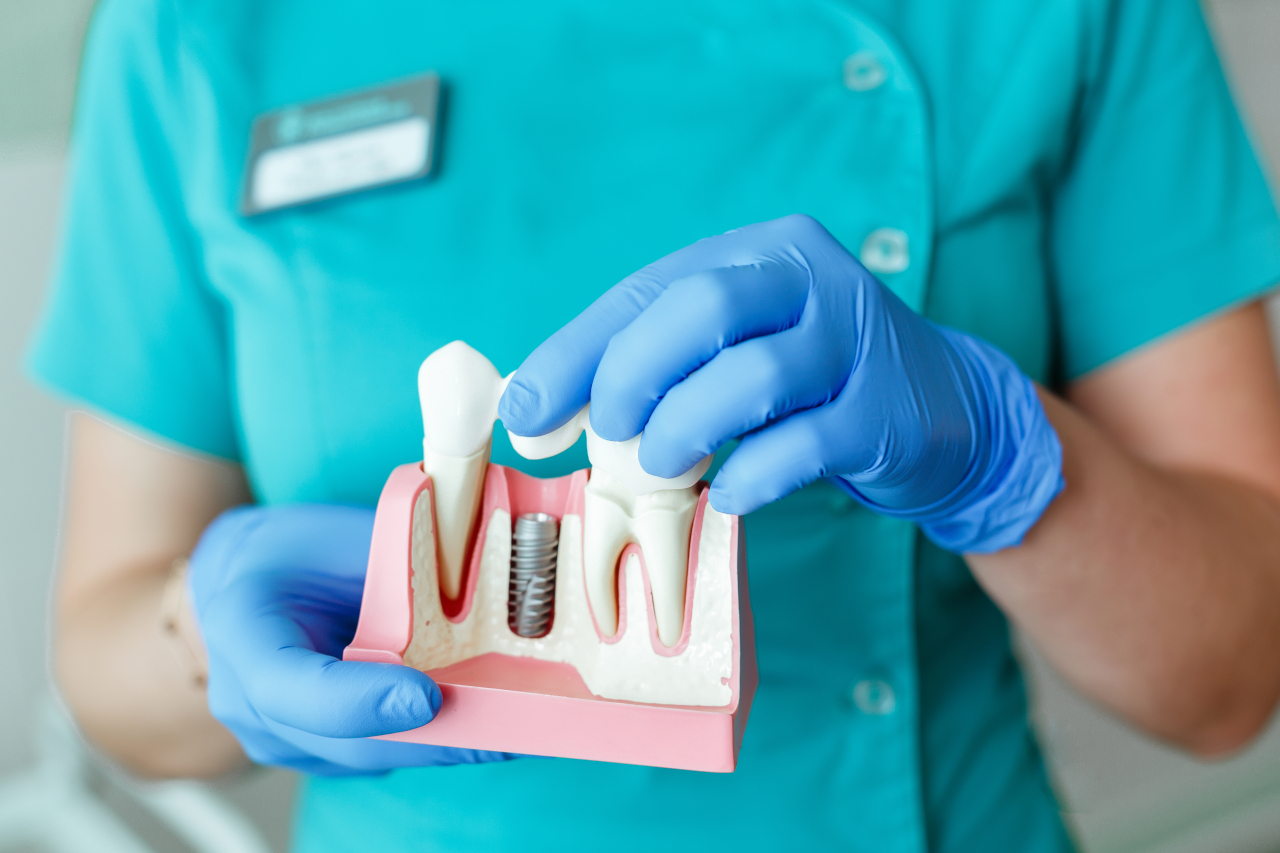
A dental implant is a small post placed into the jawbone to support a replacement tooth or another dental restoration.
Unlike certain traditional tooth replacement methods that rely on neighbouring teeth or the gum tissue for support, dental implants are anchored within the jawbone.
A single-tooth implant restoration generally consists of three components:
- The implant post: A small, commonly titanium component placed within the jawbone to act as an artificial tooth root.
- The abutment: A connecting component that attaches the replacement tooth to the implant.
- The dental crown: A customized restoration that replaces the visible portion of the missing tooth.
Following implant placement, the surrounding bone needs time to heal and integrate with the implant surface. This process is known as osseointegration.
Once appropriate healing has occurred, the implant can support a restoration designed to complement the surrounding teeth and provide functional stability.
What Happens If You Leave a Missing Tooth Untreated?
Some patients adjust to a missing tooth and experience relatively little immediate discomfort. However, changes can develop gradually.
For example, neighbouring teeth may begin shifting into the open space. A tooth in the opposing arch may also move because it no longer has normal contact with its former biting partner.
Additionally, the jawbone in the area of a missing tooth can gradually lose volume after extraction because the natural tooth root is no longer present.
These changes may affect future restorative treatment planning. In certain situations, patients who have been missing teeth for an extended period may require additional procedures before implant placement is possible.
Not every missing tooth requires immediate replacement. Nevertheless, discussing available options with your dentist can help you understand the potential long-term effects of leaving an open space untreated.
Can Dental Implants Help You Eat More Comfortably?
One of the primary reasons patients consider dental implants is the desire for improved chewing function.
Because an implant-supported crown is connected to an implant anchored within the jawbone, it can provide a stable surface for biting and chewing once healing and restoration are complete.
For suitable patients, this stability may make it easier to enjoy a wider variety of foods without relying exclusively on one side of the mouth.
However, dental implants are not indestructible. Excessive biting forces, teeth grinding, and certain habits can damage implant-supported restorations.
Additionally, patients must follow dietary instructions during healing rather than immediately returning to all normal foods.
Your dentist can explain when it is appropriate to resume regular chewing and how to protect the implant over time.
Are Dental Implants Better Than Bridges or Dentures?
Dental implants, bridges, and dentures each serve important roles in restorative dentistry. However, the most appropriate option depends on your individual needs rather than one treatment being universally better than another.
Dental Implants
Implants provide independent support for certain replacement teeth and generally do not require neighbouring teeth to be prepared in the same way as a conventional bridge.
However, implant treatment involves a surgical procedure, adequate healing time, and evaluation of the available jawbone.
Dental Bridges
A conventional dental bridge replaces one or more missing teeth using support from neighbouring teeth.
A bridge may be suitable when implant placement is not appropriate or when surrounding teeth already require restorations.
Patients must maintain effective cleaning around and beneath the replacement tooth to support long-term oral health.
Dentures
Removable dentures can replace several missing teeth or an entire arch. For some patients, dentures provide a practical restorative option without implant surgery.
Alexandra Park Dental offers dentures in Leduc alongside dental implant services, allowing patients to explore different approaches to tooth replacement.
During a consultation, your dentist can explain the advantages, limitations, treatment timelines, and estimated costs associated with each option.
Who Is a Candidate for Dental Implants?
Many adults with missing teeth may be candidates for dental implant treatment. However, a comprehensive assessment is necessary before determining suitability.
Your dentist will consider several factors, including:
- The amount and quality of available jawbone
- The health of your gums and remaining teeth
- The location of the missing tooth or teeth
- Your general medical history and current medications
- Smoking or tobacco use
- Existing bite alignment and chewing forces
- Your ability to maintain effective oral hygiene
- Your expectations and long-term treatment goals
Patients with active gum disease may need periodontal treatment before proceeding with implant placement. Similarly, insufficient bone may require additional evaluation or preparatory procedures.
At Alexandra Park Dental, periodontal therapy in Leduc can help patients address gum health concerns that may affect restorative treatment planning.
What Happens During Dental Implant Treatment?
Dental implant treatment typically involves several stages. Although the exact sequence varies between patients, careful planning is essential to supporting long-term results.
Initial Consultation and Assessment
Your dentist examines your teeth, gums, and bite while reviewing your medical history. Dental imaging may be recommended to assess the bone and surrounding anatomical structures.
Personalized Treatment Planning
Based on the examination findings, your dentist determines whether implant treatment is appropriate and discusses the proposed approach, expected timeline, and estimated fees.
Implant Placement
The implant is placed into the jawbone during a planned surgical procedure. Local anesthesia is typically used to manage discomfort during treatment.
Healing and Bone Integration
The surrounding bone needs time to heal and establish a stable connection with the implant. This process often takes several months, although individual timelines vary.
Placement of the Final Restoration
When healing is sufficient, the customized replacement tooth or other planned restoration can be attached to the implant.
Following restoration, your dentist will assess your bite and provide instructions for maintaining the implant and surrounding tissues.
Benefits of Dental Implants for Missing Teeth
- Improved chewing stability: Implant-supported restorations can provide a stable foundation for everyday biting and chewing.
- Support for jawbone health: Dental implants can help maintain bone in the area surrounding the implant by transferring functional forces to the jaw.
- Independent tooth replacement: A single-tooth implant generally does not require adjacent healthy teeth to support the restoration.
- Natural-looking restorations: Customized dental crowns can be designed to complement the surrounding teeth.
- Long-term restorative potential: Properly maintained implants may remain functional for many years.
- Improved everyday convenience: Fixed implant-supported crowns do not need to be removed for routine eating or sleeping.
- Support for natural tooth spacing: Replacing a missing tooth may help maintain the relationships between surrounding teeth.
- Personalized treatment options: Implant treatment can be planned according to the location of missing teeth, available bone, and individual restorative needs.
Are There Risks Associated With Dental Implants?
Like any surgical dental procedure, implant placement involves potential risks that should be discussed before treatment.
These may include infection, delayed healing, damage to nearby structures, failure of the implant to integrate with the bone, or complications involving the surrounding gum tissue.
Additionally, the crown or other restorative components may eventually require maintenance, repair, or replacement.
Careful examination, appropriate treatment planning, and consistent follow-up appointments help manage these risks.
Patients should inform their dentist about medical conditions, medications, smoking habits, and previous surgical experiences that may influence treatment or recovery.
How to Care for Dental Implants
Dental implants cannot develop cavities in the same way as natural teeth. However, the gums and bone surrounding them remain susceptible to inflammation and disease.
Therefore, maintaining excellent oral hygiene is essential.
Brush twice daily and clean around the implant using the methods recommended by your dental team. Depending on the design of your restoration, specialized floss or interdental cleaning tools may be helpful.
Additionally, attend regular dental appointments to monitor the implant, surrounding tissues, and condition of the restoration.
Alexandra Park Dental provides routine checkups and cleanings in Leduc to help patients maintain their natural teeth and dental restorations.
If you notice persistent bleeding, swelling, discomfort, or movement involving an implant restoration, arrange an evaluation promptly.
How Much Do Dental Implants Cost in Leduc?
Dental implant costs vary according to the number of teeth being replaced, the condition of the jawbone, the type of restoration, and whether additional procedures are required.
For example, replacing a single missing tooth may involve a different treatment plan than restoring several missing teeth.
Insurance coverage also varies between providers and individual plans. Therefore, requesting a personalized treatment estimate is the most reliable way to understand potential expenses.
During your consultation, ask about the estimated cost of each treatment stage, possible additional procedures, and available payment arrangements.
Frequently Asked Questions About Dental Implants
Can I get a dental implant years after losing a tooth?
Possibly. Your dentist must evaluate the remaining bone and surrounding oral structures to determine whether implant placement is suitable.
Does getting a dental implant hurt?
Local anesthesia is typically used during placement. Some tenderness and swelling may occur afterward, depending on the procedure and individual healing response.
Can dental implants replace more than one missing tooth?
Yes. Depending on the treatment plan, implants may support individual crowns or other restorations designed to replace multiple teeth.
Will I be without a tooth during implant healing?
Temporary tooth replacement options may be available. Your dentist can discuss the possibilities based on the location of the missing tooth and your treatment plan.
How long do dental implants last?
Dental implants can remain functional for many years, but their longevity depends on oral hygiene, bone and gum health, chewing forces, and other individual factors.
Can I eat normally with dental implants?
Once healing is complete and the restoration has been approved for normal use, many patients experience improved chewing function. Your dentist will provide individualized guidance.
Rediscover Comfortable Chewing With Dental Implants in Leduc
Living with missing teeth does not have to mean permanently changing the foods you enjoy or accepting ongoing difficulties with chewing. Dental implant treatment may provide a stable, long-term restorative solution that supports both oral function and comfort.
If you are interested in replacing missing teeth, contact Alexandra Park Dental in Leduc at (780) 986-6500 to schedule a consultation. Our team can help you explore whether dental implants or another tooth replacement option is right for your individual needs.